
When Piles Are Not the Problem: Other Colorectal Conditions With Similar Symptoms
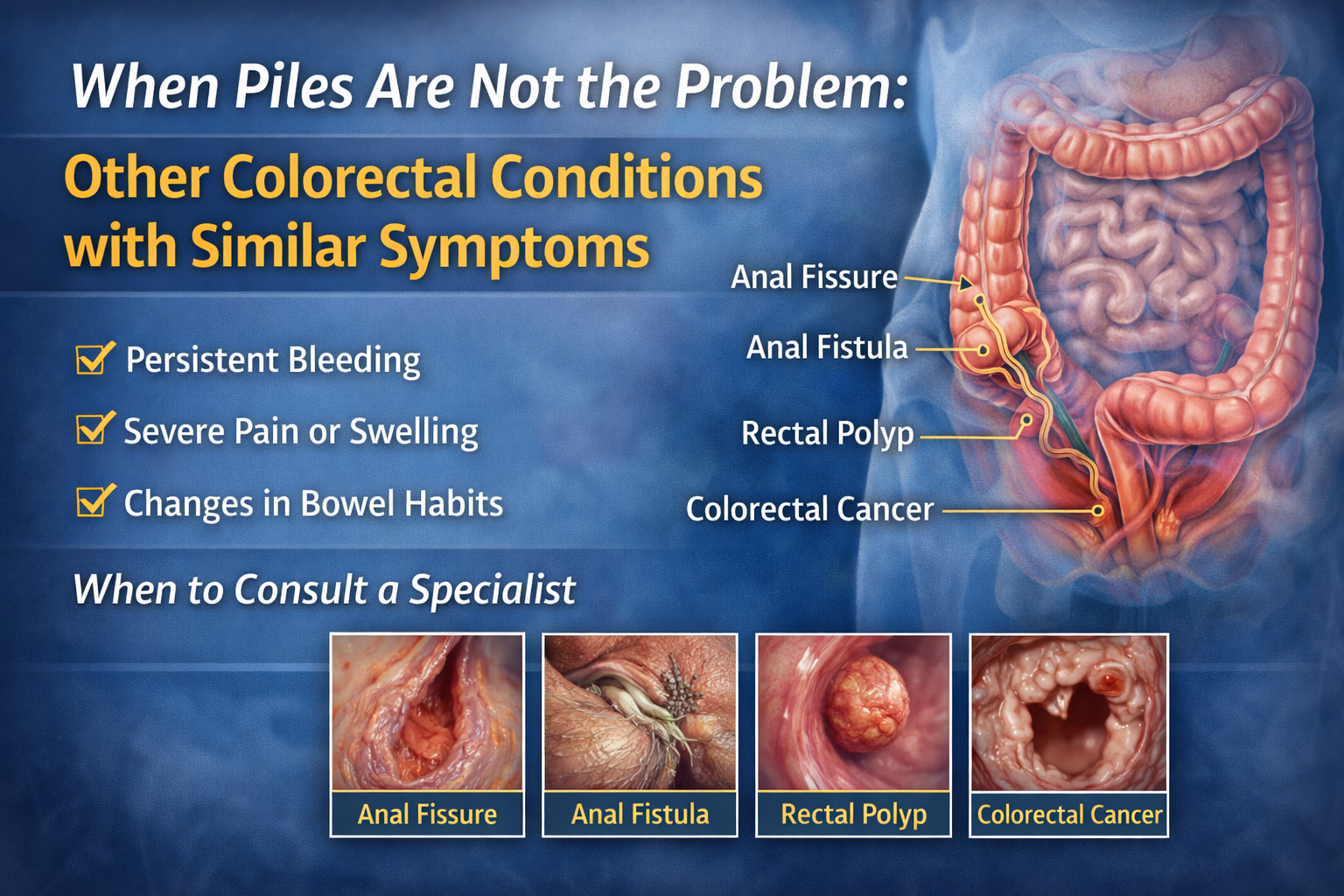
When piles are not the problem, many patients continue to suffer because they assume rectal pain or bleeding is harmless. Piles (hemorrhoids) are common, but not every colorectal symptom is caused by them. Several colorectal conditions share similar warning signs, and misdiagnosis or delay in treatment can lead to complications. Understanding these conditions helps patients seek timely and appropriate care.
Why Colorectal Symptoms Are Often Misunderstood
Rectal discomfort, itching, pain during bowel movements, or blood in the stool are frequently blamed on piles. While hemorrhoids are indeed common, these symptoms can also indicate more serious colorectal conditions. Self-treatment with over-the-counter medications without proper diagnosis may temporarily mask symptoms while the underlying problem worsens.
Anal Fissure: A Commonly Confused Condition
An anal fissure is a small tear in the lining of the anus, often caused by hard stools or chronic constipation. It typically presents with sharp pain during or after bowel movements and fresh blood on toilet paper. Unlike piles, fissures are associated with intense pain rather than swelling. If untreated, fissures can become chronic and may require surgical intervention.
Anal Fistula: A Hidden Infection
An anal fistula develops due to an infection near the anal glands, forming an abnormal tunnel between the anal canal and the skin. Symptoms may include persistent discharge, swelling, pain, and recurrent abscess formation. Because fistulas do not heal on their own, they often require colorectal surgery for complete treatment. Mistaking a fistula for piles can delay necessary care and lead to repeated infections.
Rectal Polyps: Often Silent but Serious
Rectal or colorectal polyps are abnormal growths in the colon or rectum. They may cause bleeding or changes in bowel habits but often remain symptomless. While most polyps are benign, some can become cancerous over time. Assuming bleeding is due to piles may cause patients to overlook polyps, delaying early detection and removal.
Colorectal Cancer: Symptoms That Should Never Be Ignored
Colorectal cancer can initially mimic piles, especially when symptoms include blood in the stool, unexplained weight loss, fatigue, or changes in bowel habits. Persistent symptoms, especially in individuals over 45 or those with a family history, should always be evaluated by a specialist. Early diagnosis significantly improves treatment outcomes.
Chronic Constipation and Rectal Prolapse
Long-term constipation can weaken pelvic and rectal muscles, leading to rectal prolapse—a condition where part of the rectum protrudes through the anus. This may be mistaken for piles due to a visible bulge. However, rectal prolapse requires specialized colorectal evaluation and often surgical correction.
When Should You See a Colorectal Surgeon?
You should consult a colorectal specialist if:
- Rectal bleeding persists or worsens
- Pain during bowel movements is severe or recurrent
- There is discharge, swelling, or fever
- Symptoms do not improve with basic treatment
- There are changes in bowel habits or unexplained weight loss
Early consultation helps ensure accurate diagnosis and appropriate treatment.
Final Thoughts
When piles are not the problem, ignoring symptoms can delay the diagnosis of serious colorectal conditions. Many disorders share similar warning signs, but each requires a different treatment approach. Seeking timely evaluation from a qualified colorectal surgeon ensures accurate diagnosis, effective treatment, and long-term relief. Awareness is the first step toward better colorectal health and prevention of complications.
Consult Dr. Nikhil Jillawar for Expert Colorectal Care
If you are experiencing persistent rectal pain, bleeding, or symptoms that are not improving with routine treatment, timely evaluation is essential. Dr. Nikhil Jillawar, an experienced surgical gastroenterologist, offers accurate diagnosis and advanced colorectal treatment tailored to each patient’s condition.
👉 Book a consultation with Dr. Nikhil Jillawar today to identify the real cause of your symptoms and receive the right treatment at the right time.