
How Stress and Mental Health Affect Your Digestive System: What Every Patient Should Know
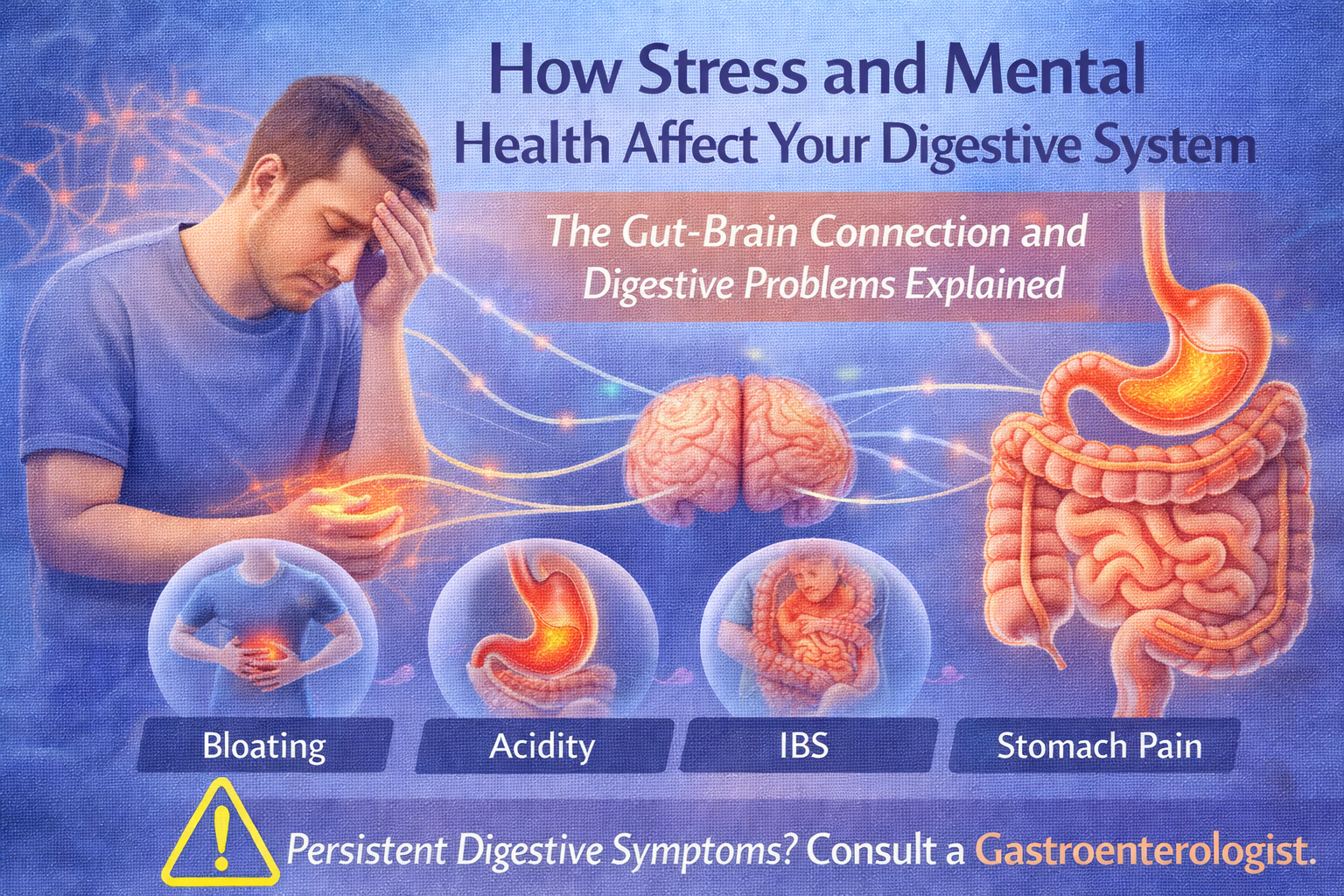
Stress is a normal part of modern life, but many people don’t realize how deeply it affects digestion. Stress and mental health affect your digestive system through a strong connection between the brain and the gut. When this balance is disturbed, it can lead to persistent digestive symptoms that often go unexplained by routine tests.
Understanding the Gut–Brain Connection
The digestive system and the brain communicate constantly through what is known as the gut–brain axis. This connection involves nerves, hormones, and gut bacteria. When you feel stressed or anxious, your brain sends signals that can change how your stomach and intestines function. This is why emotional stress often shows up as physical digestive discomfort.
Common Digestive Symptoms Triggered by Stress
Stress and mental health affect your digestive system in several ways. Some of the most common stress-related digestive symptoms include:
- Bloating and excessive gas
- Acid reflux or heartburn
- Abdominal cramps
- Constipation or diarrhea
- Nausea or loss of appetite
These symptoms are frequently seen in conditions like irritable bowel syndrome (IBS) and functional digestive disorders.
How Stress Physically Impacts Digestion
When the body is under stress, it releases hormones such as cortisol and adrenaline. These hormones slow digestion, alter gut movement, and increase stomach acid production. Stress can also affect gut bacteria balance, which plays a key role in digestion and immunity. Over time, chronic stress can worsen existing digestive conditions and delay recovery.
Stress vs Organic Digestive Disease
Not all digestive symptoms are caused by stress alone. While stress and mental health affect your digestive system, it is important to rule out underlying medical conditions such as ulcers, gallbladder disease, liver disorders, or inflammatory bowel disease. Warning signs like unexplained weight loss, blood in stools, severe pain, or persistent vomiting should always be evaluated by a specialist.
Why Stress-Related Digestive Problems Are Often Missed
Stress-related digestive issues may not show abnormalities on scans or blood tests. This can leave patients feeling frustrated and misunderstood. However, functional digestive disorders are real conditions and need a structured approach that addresses both physical symptoms and lifestyle factors.
Managing Stress for Better Digestive Health
Improving digestive health often requires managing stress alongside medical treatment. Helpful strategies include:
- Eating meals on time and avoiding trigger foods
- Practicing relaxation techniques such as deep breathing or meditation
- Getting adequate sleep
- Staying physically active
- Limiting caffeine, alcohol, and smoking
In many cases, these lifestyle changes significantly reduce digestive symptoms.
When to See a Gastroenterologist
If digestive symptoms persist for weeks, interfere with daily life, or keep recurring during stressful periods, it’s important to consult a gastroenterologist. A specialist can determine whether symptoms are stress-related, diagnose underlying conditions, and create a personalized treatment plan.
At Gastro Liver Care Pune, patients receive comprehensive evaluation for digestive, liver, and gastrointestinal conditions, ensuring both physical and lifestyle factors are addressed for long-term relief.
Final Thoughts
Stress and mental health affect your digestive system more than most people realize. Ignoring this connection can lead to chronic discomfort and repeated flare-ups. With timely medical guidance, lifestyle adjustments, and proper care, stress-related digestive issues can be effectively managed, helping patients regain comfort and confidence in their daily lives.