
Persistent Nausea Without Vomiting: Could It Be a Digestive Disorder?
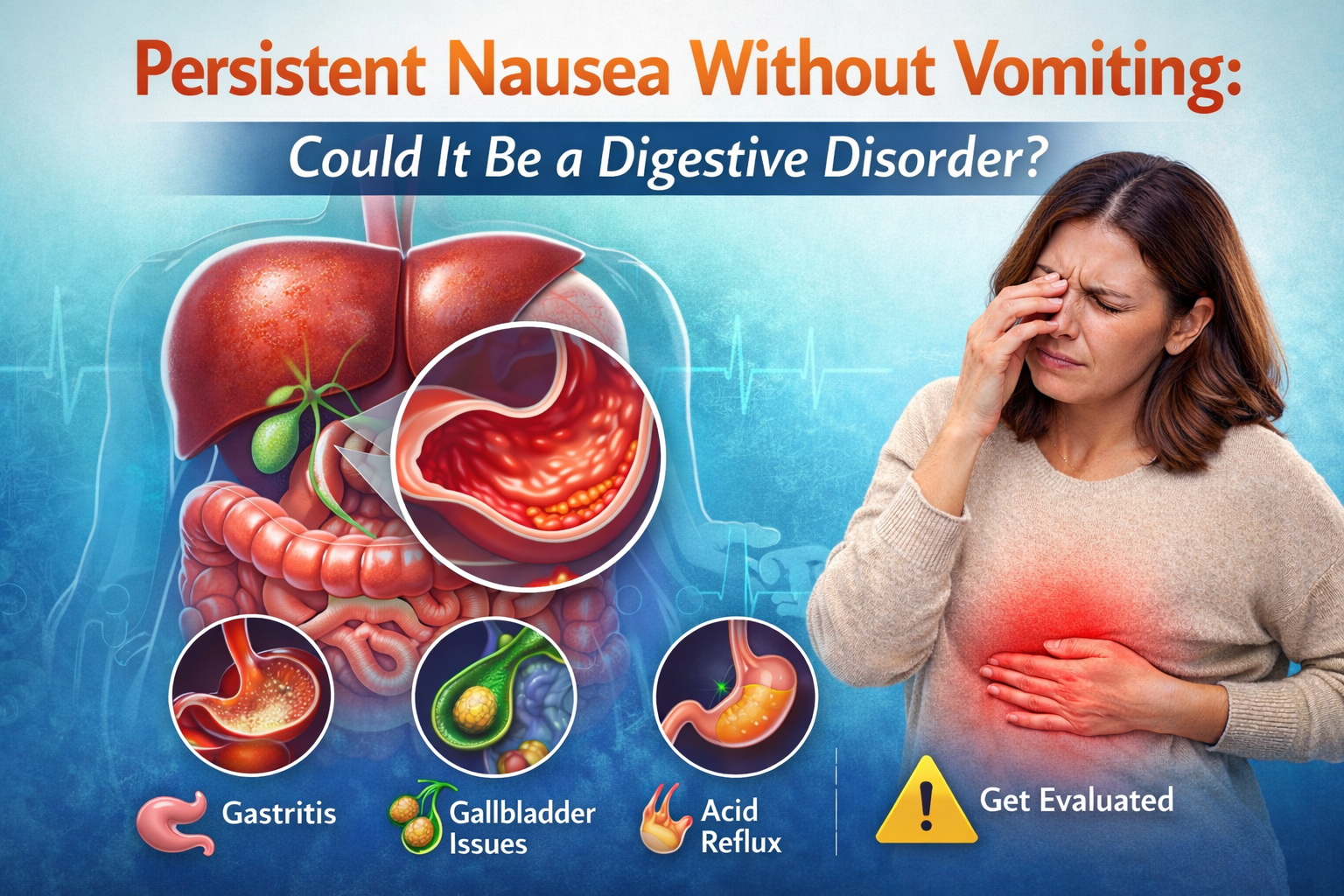
Persistent nausea without vomiting is a symptom many people experience but often ignore. When nausea lingers for days or weeks without an obvious cause like food poisoning or infection, it may signal an underlying digestive disorder. While occasional nausea is common, ongoing discomfort should never be dismissed, especially when it begins to interfere with daily life.
What Does Persistent Nausea Mean?
Persistent nausea refers to a constant or frequently recurring feeling of sickness in the stomach that does not result in vomiting. Unlike sudden nausea caused by overeating or motion sickness, chronic nausea tends to develop slowly and last longer. Many patients describe it as a heavy, unsettled feeling that worsens after meals or in the morning.
Common Digestive Causes of Persistent Nausea Without Vomiting
Several gastrointestinal conditions can lead to persistent nausea without vomiting. Some of the most common include:
- Gastritis: Inflammation of the stomach lining can cause nausea, bloating, and discomfort, especially after eating.
- Acid reflux (GERD): Stomach acid flowing back into the esophagus often causes nausea along with heartburn or throat irritation.
- Gallbladder disorders: Gallstones or poor gallbladder function may lead to nausea after fatty meals without causing pain initially.
- Liver-related issues: Early liver conditions can trigger digestive symptoms like nausea, loss of appetite, and fullness.
- Functional digestive disorders: Conditions such as functional dyspepsia can cause nausea even when tests appear normal.
Other Factors That Can Trigger Ongoing Nausea
Persistent nausea without vomiting is not always caused by a single condition. Lifestyle habits and medications may also play a role. Irregular meal timings, excessive oily or spicy foods, stress, anxiety, and long-term use of painkillers can all irritate the digestive system. Hormonal changes and dehydration may also worsen symptoms.
Warning Signs You Should Not Ignore
While nausea alone may seem harmless, certain signs indicate the need for medical evaluation. These include:
- Nausea lasting more than one to two weeks
- Unexplained weight loss
- Loss of appetite or early fullness
- Upper abdominal discomfort or bloating
- Yellowing of eyes or dark urine
These symptoms may suggest gallbladder, liver, or stomach-related problems that require professional attention.
How Persistent Nausea Is Diagnosed
Diagnosing persistent nausea without vomiting usually involves a detailed medical history, physical examination, and diagnostic tests. Blood tests, ultrasound scans, endoscopy, or liver function tests may be recommended to identify the underlying cause. Early diagnosis helps prevent complications and allows targeted treatment.
Treatment and Management Options
Treatment depends on the root cause of nausea. Managing gastritis or acid reflux may involve dietary changes and medications to reduce stomach acid. Gallbladder or liver conditions may require further monitoring or specific treatment plans. In many cases, simple lifestyle modifications such as eating smaller meals, avoiding fatty foods, staying hydrated, and reducing stress can significantly improve symptoms.
When to See a Gastro Specialist
If you are experiencing persistent nausea without vomiting, bloating, or unexplained digestive discomfort, it’s important not to ignore these symptoms. At Sri Gastro Clinic, Dr. Nikhil Jillawar provides expert evaluation and personalized treatment for digestive, liver, and gallbladder conditions.
Book a consultation today to identify the root cause early and get the right care for lasting digestive relief.
Final Thoughts
Persistent nausea without vomiting is not something to live with or ignore. It is often your body’s way of signaling a digestive disorder that needs attention. Addressing the cause early can restore comfort, improve digestion, and protect your long-term gastrointestinal health.