
Why You Feel Bloated Even When You Eat Less: Hidden Digestive Causes Explained
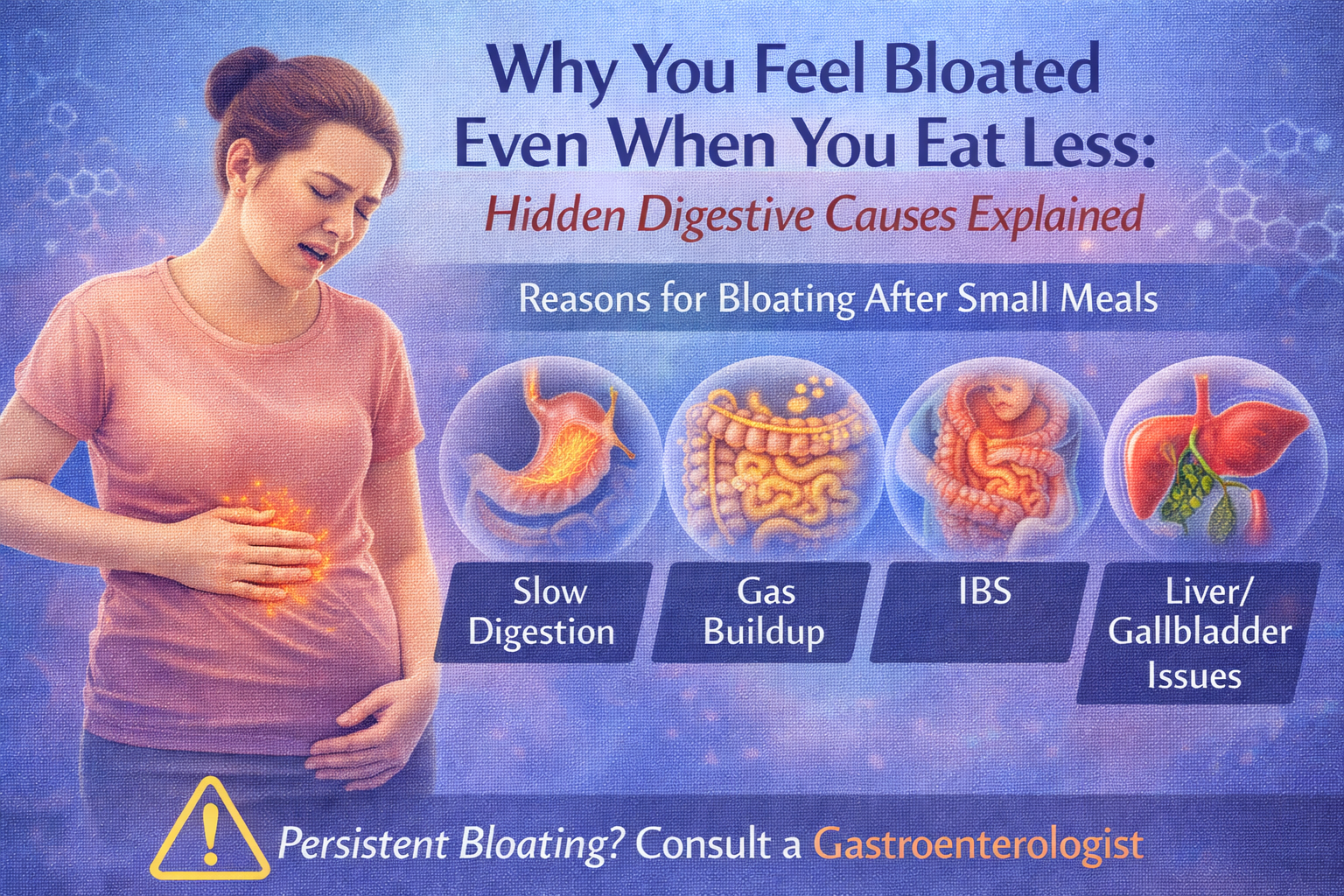
Many patients complain that they feel uncomfortable and full despite eating small portions. Feeling bloated even when eating less is a common digestive issue that often goes beyond simple overeating. When bloating becomes frequent or persistent, it may signal an underlying digestive problem that needs medical attention.
What Does Bloating Really Mean?
Bloating is the sensation of abdominal fullness, tightness, or swelling. It may be accompanied by gas, discomfort, or visible abdominal distension. While occasional bloating is normal, regular bloating after small meals should not be ignored, especially when dietary habits haven’t changed.
Common Digestive Causes of Bloating Despite Eating Less
Several digestive conditions can cause bloating even with reduced food intake:
- Slow digestion (poor gut motility): When food moves slowly through the digestive tract, gas builds up, leading to bloating.
- Gas retention: Some people produce or trap more gas due to gut bacteria imbalance.
- Food intolerance: Lactose, gluten, or certain carbohydrates can cause bloating even in small amounts.
- Irritable Bowel Syndrome (IBS): IBS commonly causes bloating that worsens after meals, regardless of portion size.
Role of Liver and Gallbladder Health
Digestive organs like the liver and gallbladder play a major role in fat digestion. When bile flow is reduced or irregular, food may not be digested properly, leading to bloating and heaviness. Conditions such as fatty liver or gallbladder dysfunction can cause bloating even when eating less.
Hormonal and Lifestyle Factors
Hormonal changes, stress, and anxiety can significantly affect digestion. Stress alters gut movement and sensitivity, making patients feel bloated quickly. Sedentary habits, irregular meal timings, and inadequate water intake can further slow digestion and worsen symptoms.
When Bloating May Be a Warning Sign
Feeling bloated even when eating less is usually harmless, but certain signs should raise concern:
- Bloating lasting several weeks
- Unexplained weight loss
- Persistent abdominal pain
- Loss of appetite
- Changes in bowel habits
These symptoms may indicate conditions that require evaluation, such as liver disease, intestinal inflammation, or pancreatic disorders.
How the Cause of Bloating Is Diagnosed
A gastroenterologist may assess bloating through:
- Detailed dietary and symptom history
- Blood tests to check liver and digestive function
- Ultrasound or imaging studies
- Endoscopy or colonoscopy if needed
Accurate diagnosis helps target the real cause instead of relying on temporary remedies.
Managing and Preventing Bloating
Treatment depends on the underlying cause. Common approaches include:
- Eating smaller, well-timed meals
- Avoiding trigger foods
- Improving hydration
- Managing stress
- Medical treatment for gut, liver, or gallbladder conditions
Self-medication may provide short-term relief but does not solve the root problem.
When to Consult a Gastro Specialist
If bloating persists despite eating less and lifestyle changes, it’s important to seek expert care. Early evaluation prevents complications and helps restore digestive comfort.
At Gastro Liver Care Pune, patients receive comprehensive diagnosis and personalized treatment for digestive, liver, and gastrointestinal disorders, ensuring long-term relief from bloating and related symptoms.
Final Thoughts
Feeling bloated even when eating less is your body’s way of signaling a digestive imbalance. Identifying the hidden cause early allows effective treatment and improves quality of life. With proper medical guidance and care, most bloating issues can be successfully managed.