
When and Why to Prefer Endoscopy over Surgery for Gallbladder Disorders — What Patients Should Know
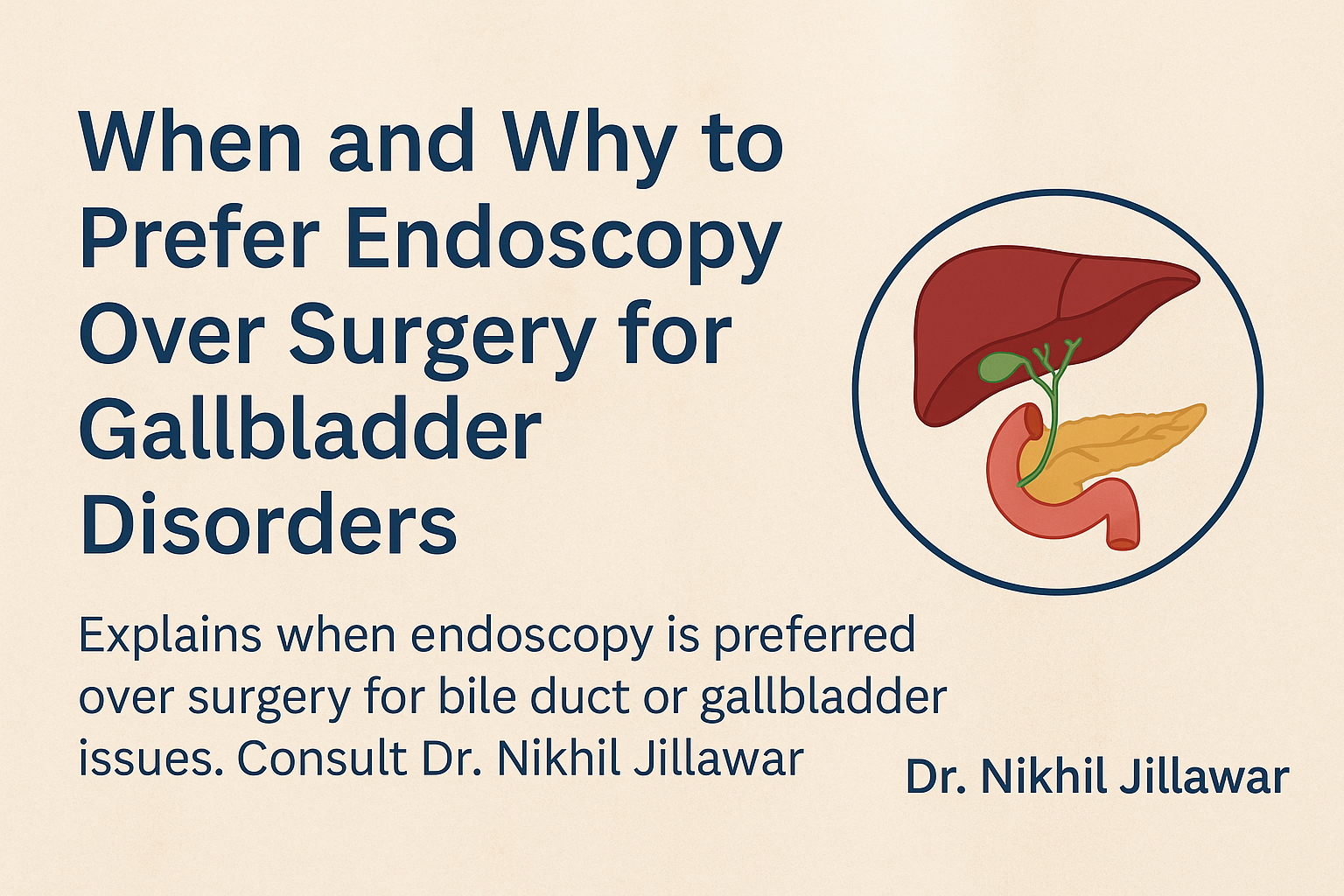
When and Why to Prefer Endoscopy Over Surgery for Gallbladder Disorders
Gallbladder problems are becoming increasingly common, especially due to lifestyle habits, irregular eating patterns, and high-fat diets. Many patients search for the safest and least painful treatment option for gallstones or gallbladder inflammation. This is where understanding the difference between endoscopy and surgery becomes essential. While surgery is often considered the standard treatment for gallbladder issues, endoscopy is gaining popularity for select cases because it is minimally invasive, fast, and offers a quicker recovery.
Understanding Gallbladder Disorders
The gallbladder stores bile, which helps digest fats. When bile becomes thick or concentrated, it may form gallstones, leading to symptoms such as abdominal pain, acidity, nausea, back pain, and bloating. If untreated, gallstones can block the bile ducts, cause infection, or even lead to pancreatitis.
Traditionally, surgery (cholecystectomy) has been the primary treatment, but thanks to advancements in medical technology, endoscopic procedures can now help manage certain gallbladder and bile duct–related problems effectively.
When Endoscopy is Preferred
Endoscopy is recommended when the issue is related to the bile duct, not the gallbladder itself. This includes conditions such as:
1. Stones in the Common Bile Duct (CBD)
When gallstones travel from the gallbladder into the bile duct, an endoscopic procedure like ERCP can remove them without surgery.
2. Jaundice Due to Blocked Bile Duct
Endoscopy is ideal for clearing obstructions and restoring bile flow quickly.
3. Pancreatitis Caused by Migrating Stones
Early endoscopic removal of duct stones can reduce inflammation and prevent further complications.
4. Strictures or Narrowing of the Bile Duct
Stenting via endoscopy helps in drainage and relieves symptoms without the need for major surgery.
These procedures offer major advantages:
- No external cuts or stitches
- Shorter recovery time
- Minimal pain
- Often done as a day-care procedure
When Surgery Becomes Necessary
While endoscopy is useful for bile duct issues, gallbladder removal surgery is still the gold standard for:
- Recurrent gallbladder pain
- Chronic cholecystitis
- Infection or pus formation
- Large or multiple gallstones
- Gallbladder polyps
- Gallbladder wall thickening
- Stones causing repeated complications
Laparoscopic cholecystectomy is a minimally invasive surgery performed through small incisions and usually involves a recovery period of 2–4 days.
Endoscopy vs Surgery: How Doctors Decide
Doctors evaluate several factors before choosing between endoscopy and surgery:
- Location of stones
- Severity of symptoms
- Presence of infection
- Blockage in ducts
- Previous medical history
- Patient’s age and overall fitness
In many cases, a combined approach is used — endoscopy first to clear the bile duct, followed by laparoscopic surgery to remove the gallbladder permanently so stones don’t recur.
Why Early Diagnosis Matters
Delaying treatment for gallbladder disorders can lead to repeated attacks, infection, jaundice, or pancreatitis. Early consultation with a gastroenterologist ensures timely management and prevents emergency complications.
Consult Expert Gastroenterologist – Dr. Nikhil Jillawar
If you are experiencing persistent acidity, abdominal pain, jaundice, or symptoms related to gallstones, consulting an experienced specialist is crucial. Dr. Nikhil Jillawar, a leading Gastroenterologist and GI Surgeon in Pune, is known for his expertise in endoscopy, ERCP, and advanced laparoscopic surgeries. His patient-centric approach ensures accurate diagnosis, personalized treatment, and safe recovery for all gallbladder and bile duct disorders.