
Understanding Advanced Endoscopic Procedures: ERCP, EUS & When They’re Needed
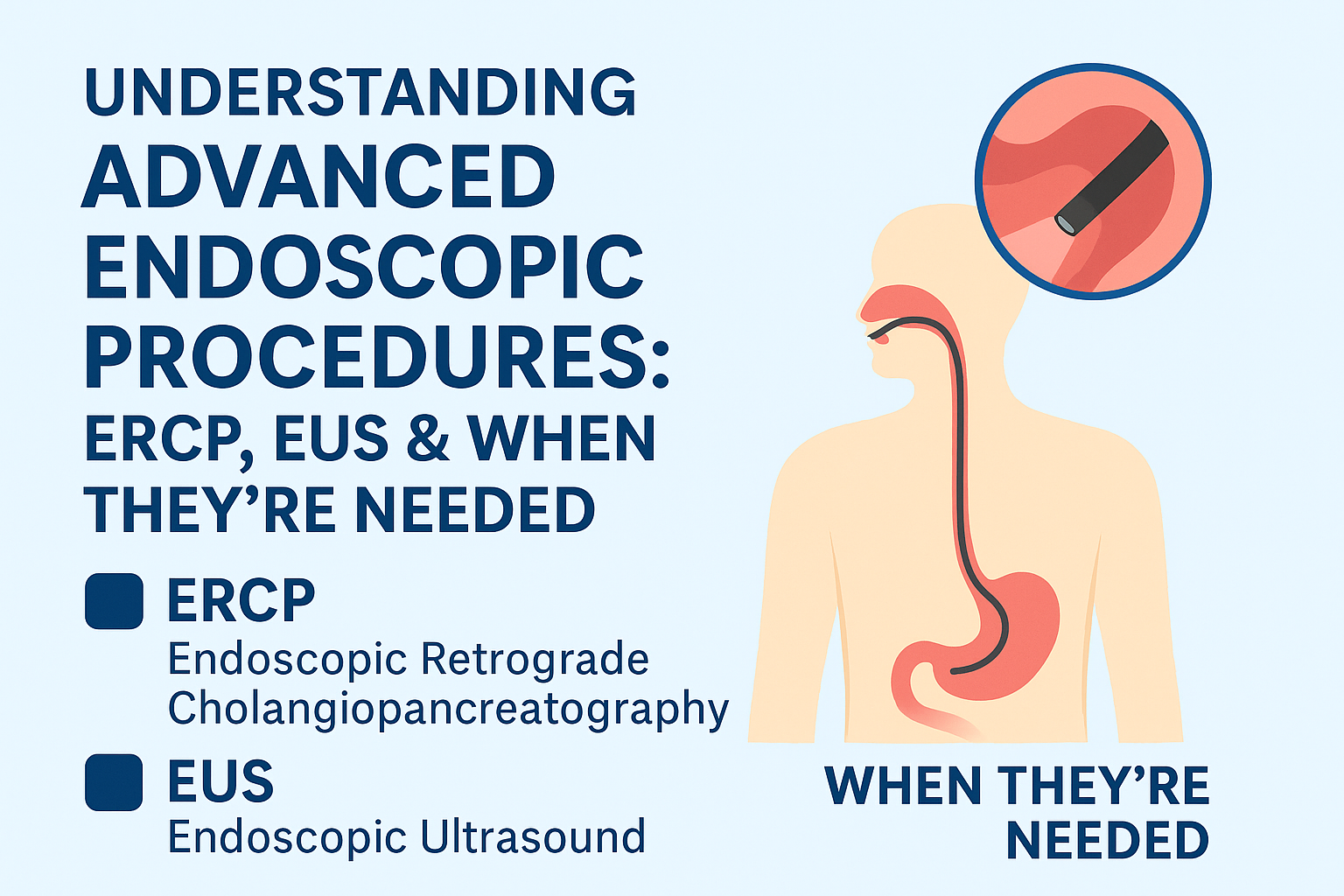
Advances in gastroenterology have made diagnosing digestive and liver-related diseases faster, safer, and more accurate than ever. Among the most important innovations are advanced endoscopic procedures, especially ERCP (Endoscopic Retrograde Cholangiopancreatography) and EUS (Endoscopic Ultrasound). These procedures allow doctors to not only visualize internal organs but also treat several conditions without open surgery. For patients dealing with unexplained abdominal pain, jaundice, gallstones, or pancreatic issues, understanding these procedures can help reduce anxiety and support informed decision-making.
What Are Advanced Endoscopic Procedures?
Endoscopy traditionally involves inserting a flexible tube with a camera into the digestive tract. However, advanced endoscopic procedures like ERCP and EUS go far beyond routine endoscopy. They combine imaging, diagnosis, and therapeutic capabilities, allowing gastroenterologists to treat complex conditions of the bile ducts, pancreas, and upper gastrointestinal tract with minimal downtime.
Understanding ERCP (Endoscopic Retrograde Cholangiopancreatography)
ERCP is a specialized procedure used to diagnose and treat disorders of the bile ducts, pancreatic ducts, and gallbladder region. It uses endoscopy along with X-ray imaging to give a detailed view of ductal structures. ERCP is especially useful for removing bile duct stones, placing stents, treating strictures, and managing complications linked to pancreatitis.
Patients who experience symptoms such as persistent jaundice, recurrent abdominal pain, pancreatitis, or suspected blockages often benefit from ERCP. Because ERCP allows both detection and treatment in the same session, it reduces the need for invasive surgery and ensures quicker recovery.
Understanding EUS (Endoscopic Ultrasound)
EUS is another highly advanced technique combining endoscopy with high-resolution ultrasound imaging. It provides clear internal visuals of organs such as the pancreas, liver, gallbladder, and lymph nodes. One of the major uses of EUS is the early detection of pancreatic cancer, small tumors, stones, and structural abnormalities that are not visible on regular scans.
EUS also allows fine-needle aspiration (FNA)—a minimally invasive way to collect tissue samples for biopsy. This makes it extremely valuable in diagnosing cancers, cysts, and other suspicious lesions at an early stage.
When Are ERCP and EUS Needed?
Doctors may recommend these advanced endoscopic procedures when traditional imaging like ultrasound or CT scans does not provide clear answers. They are essential in cases involving:
- Unexplained jaundice
- Severe or recurrent abdominal pain
- Suspected bile duct or pancreatic duct blockages
- Gallstone complications
- Pancreatic cysts or tumors
- Chronic pancreatitis
- Unexplained digestive bleeding
Both procedures offer high diagnostic accuracy and help avoid unnecessary surgeries by targeting the underlying issue directly.
Preparation, Recovery & Safety
Most patients undergo ERCP or EUS under mild sedation or anesthesia. The procedures are generally safe, though ERCP may carry a small risk of pancreatitis in some individuals. Recovery is quick, and most patients return home the same day. Your gastroenterologist will provide specific dietary and medication instructions before and after the procedure.
Why These Procedures Matter
Early and accurate diagnosis is the key to preventing complications and improving treatment outcomes in gastrointestinal and liver diseases. Through advanced endoscopic procedures, specialists can detect issues that would otherwise require surgery or may remain undiagnosed for years. These techniques offer precision, minimal discomfort, shorter recovery, and significantly better patient outcomes.
Consult the Experts at Sri Gastro Liver Care, Pune
If you are experiencing symptoms like abdominal pain, jaundice, indigestion, or require evaluation for pancreatic or liver-related conditions, Sri Gastro Liver Care, Pune offers world-class diagnosis and treatment. Led by Dr. Nikhil Jillawar, an experienced Surgical Gastroenterologist and Advanced Laparoscopic Surgeon, the centre specializes in advanced endoscopic procedures, minimally invasive surgeries, and comprehensive digestive care. With state-of-the-art technology and patient-focused treatment plans, Sri Gastro Liver Care ensures accurate diagnosis, faster recovery, and the best outcomes for every patient.