
Abdominal Trauma: When Is Emergency Surgery Required?
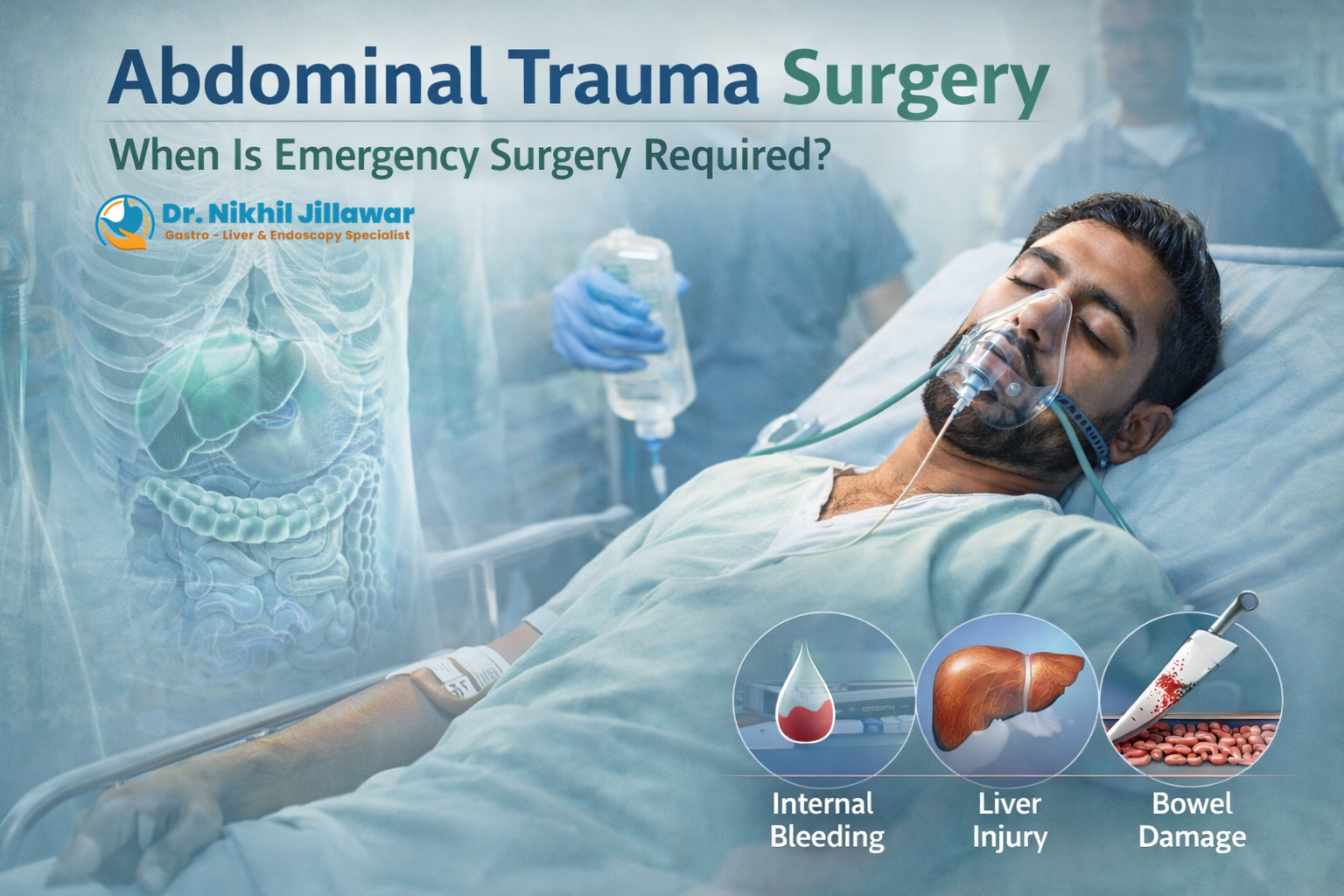
Abdominal trauma is one of the most serious medical emergencies requiring immediate evaluation and timely intervention. It involves injuries to vital organs such as the liver, spleen, pancreas, stomach, and intestines. These injuries can result from road accidents, falls, sports injuries, workplace incidents, or violent impact. In severe cases, abdominal trauma surgery becomes life-saving.
Understanding the warning signs, diagnostic process, and treatment options can help patients and families act quickly during emergencies.
What Is Abdominal Trauma?
Abdominal trauma refers to any injury affecting the abdomen and its internal organs. It is broadly classified into:
1. Blunt Abdominal Trauma
Caused by non-penetrating impact such as road traffic accidents or falls. Organs may rupture or bleed internally without visible wounds.
2. Penetrating Abdominal Trauma
Occurs when an object pierces the abdomen—such as stab wounds or industrial injuries—damaging internal structures directly.
Both types can lead to internal bleeding, organ damage, and life-threatening complications.
Common Organs Affected
- Liver – Most commonly injured due to its size
- Spleen – Prone to rupture and heavy bleeding
- Intestines – Risk of perforation and infection
- Pancreas – Complex injuries requiring specialized care
- Kidneys – May cause blood in urine
Damage to any of these organs may require urgent abdominal trauma surgery.
Warning Signs That Require Emergency Attention
Recognizing symptoms early can save lives. Seek immediate medical care if a patient experiences:
- Severe abdominal pain or swelling
- Vomiting or nausea after injury
- Blood in vomit, urine, or stool
- Difficulty breathing
- Dizziness or fainting
- Rigid or tender abdomen
- Drop in blood pressure (shock signs)
Even if symptoms appear mild initially, internal bleeding can worsen rapidly.
Diagnosis of Abdominal Trauma
Trauma surgeons use rapid diagnostic tools to assess injury severity:
- Ultrasound (FAST Scan) – Detects internal bleeding
- CT Scan – Detailed organ imaging
- X-rays – Identifies fractures or air leaks
- Blood Tests – Evaluates blood loss and infection risk
Quick diagnosis helps determine whether surgery is required or conservative management is possible.
When Is Emergency Surgery Required?
Not all abdominal injuries need surgery. However, abdominal trauma surgery becomes essential when there is:
- Uncontrolled internal bleeding
- Organ rupture (liver, spleen, intestine)
- Bowel perforation
- Penetrating injuries
- Blood accumulation in the abdomen
- Failure of non-surgical management
Surgery aims to control bleeding, repair damaged organs, remove infected tissue, and stabilize the patient.
Surgical Treatment Options
Depending on injury severity, surgeons may perform:
1. Exploratory Laparotomy
Open surgery to assess and repair multiple organ injuries.
2. Laparoscopic Trauma Surgery
Minimally invasive approach in selected stable patients.
3. Organ Repair or Resection
Damaged sections of liver, intestine, or pancreas are repaired or removed.
4. Splenectomy
Removal of the spleen if bleeding cannot be controlled.
Modern trauma care focuses on organ preservation whenever possible.
Recovery After Trauma Surgery
Recovery depends on injury extent and treatment type. Patients may require:
- ICU monitoring
- Blood transfusions
- Infection control antibiotics
- Gradual dietary progression
- Physical rehabilitation
Early treatment significantly improves survival and long-term outcomes.
Emergency Care Can Save Lives
Abdominal injuries should never be ignored. Timely diagnosis and expert surgical care make the difference between life and death. If you or your loved one experiences abdominal trauma, seek immediate specialist care.
Consult the trauma and GI surgery experts at Gastro Liver Care Pune for rapid diagnosis, advanced surgical management, and comprehensive emergency support.